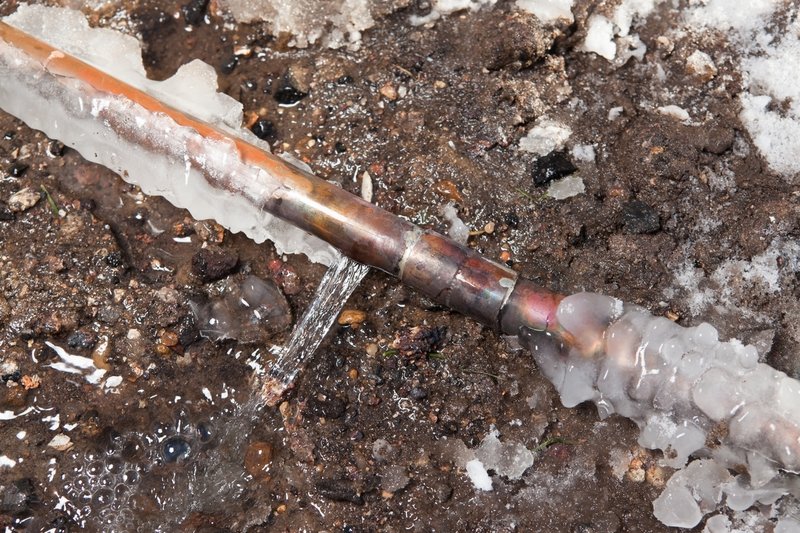
Cold snap dropped through Long Island and now a faucet has nothing coming out? Or worse, a pipe has already split and water is on the floor? We thaw frozen pipes safely, repair the bursts, and reroute or insulate so the same line does not freeze again next winter.
Long Island gets enough hard freezes each winter that frozen pipes are a real seasonal call. The vulnerable runs are the same in most Hempstead homes: supply pipes routed through an unheated attic, lines hugging an exterior wall behind a kitchen sink, the laundry hook-up in an uninsulated garage, the hose bib on the side of the house with the shutoff still open inside, and the crawl space under an addition that nobody has been into in years.
When you call a plumber to thaw frozen pipes, the wrong move is heat. A propane torch on a copper line cracks the pipe and starts a fire as soon as the ice gives way. We use a controlled, low-temperature thaw with electric heat blankets, hot air, and (for buried sections) a recirculating warm-water loop. The pipe comes back to room temperature gradually so the metal does not flex and split.
If the pipe has already burst, we shut the water at the main, locate the failed section, cut and splice a fresh length of copper or PEX, pressure test, and document the failure for your homeowners insurance. Before we leave we look at why it froze in the first place and quote either heat tape, foam insulation, or a rerouted run so you do not see us again next winter.
Common Freeze Calls
Three Kinds of Frozen-Pipe Calls We Run Most
Most frozen pipe calls in Hempstead show up in one of these three forms. Knowing which one you have helps us bring the right gear on the first truck.
Frozen & Burst
The pipe froze, split as the ice expanded, and now water is on the floor (or about to be, the moment things thaw). Highest priority: shut off the main, find the failed section, repair before any further melt. We dispatch same-day on burst calls.
Frozen, Not Burst
A faucet has nothing coming out, but no water is showing anywhere. The pipe is plugged with ice but still intact. The job is a careful thaw before the freeze either expands more or gets worse on the next cold night.
Repeat Freezer
Same pipe, second or third winter in a row. The run is in the wrong place (exterior wall, attic, uninsulated garage). The fix is not another thaw; it is a reroute, heat tape, or proper foam insulation so the line stops freezing in the first place.
If you are not sure which one yours is, send a phone photo of where the pipe is. We can usually scope it on the call within five minutes and tell you whether it is a thaw-only visit or whether you should shut the water main right now.
How We Thaw
Two Thaw Methods, Picked by Where the Pipe Is
There is no single thaw method that works for every situation. The right tool depends on whether the pipe is exposed or buried in a wall.
Exposed PipeBasement, garage, crawl space
Electric heat blanket or hot-air gun. Wrap the frozen section with a thermostatically-controlled heat blanket, or warm the pipe slowly with a hot-air gun on low. Open the nearest faucet so the melting ice has somewhere to go. Most exposed thaws take 30 to 90 minutes depending on how long the pipe has been frozen.
In-Wall PipeBehind drywall
Patient warm-water loop. A small access cut at the closest accessible point lets us push warm (not hot) water through the line in a recirculating loop. Slower than a heat blanket but the only way to thaw a wall-buried run without opening every cavity. Often combined with raising the room temperature with a space heater.
What we do not do: propane torches, MAPP gas, or any open-flame heat on a frozen copper line. The flex of the metal as the ice gives way is the same flex that splits the pipe. Plus the fire risk inside walls and around insulation is real. If a previous plumber for burst pipes used a torch and you are now looking at a hole in the joist, we can repair that too.
If the freeze was localized to a hose bib or exterior spigot that was left on through the polar vortex, we can usually thaw and replace the bib with a frost-free model in the same visit.
What's Included
Flat-Rate Pricing, Pressure Tested After the Thaw
Flat-rate trip and diagnostic
Every frozen pipe call starts with a flat trip charge that covers the diagnostic and the locate. The fee applies toward any thaw or repair you authorize. No hourly clock running while we figure out where the freeze is.
Written estimate before any cuts
If the freeze has burst the pipe and we need to open access, you get a written estimate covering parts, labor, and any required code-driven extras (new shutoff valves, hammer arrestors, missing pipe support). You approve before we cut.
Pressure test & written warranty
After every thaw we run the line at full pressure and watch for drops. If the freeze caused a hairline split that did not show until the ice melted, we catch it now. Repairs carry a written workmanship warranty on the connection.
Insurance documentation
If freeze damage caused water damage you are filing on homeowners insurance, we document the failure with photos, a written cause-of-loss statement, and the location, material, and likely temperature exposure of the failed section. Adjusters get what they need to pay the claim.
How It Works
Four Steps from Frozen to Flowing
Most frozen pipe jobs follow the same path, whether it is a quick exposed-basement thaw or a wall-buried repair after a polar vortex.
1
Phone consultation
Tell us what is happening: which fixture has nothing coming out, last night's low temperature, and where you think the pipe runs. We tell you whether to shut the main and dispatch a truck. Active bursts get same-day service, freezes without a burst usually get same-day or next-morning.
2
Locate the freeze
We trace the supply from the meter to the dry fixture, often with a thermal imager, until we find the cold section. Most freezes are within a few feet of an exterior wall, an unheated attic, a vented crawl, or a garage hookup.
3
Thaw or repair
Controlled thaw with the right method for the location, or shutoff and splice if the pipe has already split. Open the nearest faucet during the thaw so melting ice has somewhere to go and we can confirm flow returns.
4
Pressure test & prevention
Pressure test the line, then quote prevention: heat tape on the vulnerable section, foam pipe insulation, an exterior shutoff for the hose bib, or a rerouted run away from the cold zone. You decide which to do now and which to schedule.
Frozen Pipe Services
Every Common Freeze Job in a Hempstead Home
From a single frozen kitchen line at 6 a.m. to a full attic reroute before next winter, here is what we run most often.
Frozen Pipe Thaw
Locate and safely thaw a supply line that has frozen but not yet burst. Heat blanket or warm-water loop depending on access. Open a faucet during thaw, watch for hairline splits as ice melts, pressure test before we leave.
Burst Frozen Pipe Repair
Pipe froze, split, and now there is freeze damage. Shut off, cut out the failed section, splice in a fresh piece in copper or PEX, pressure test, and document for insurance. Most basement burst calls are sub-hour visits once the water is off.
Heat Tape Installation
UL-listed self-regulating heat tape on the vulnerable section of pipe, plus foam jacket over it. Plugs into a standard outlet, draws power only when the pipe is cold. Best fix for a known repeat-freezer when rerouting is not practical.
Pipe Insulation Upgrade
Closed-cell foam pipe insulation on supply lines in vulnerable spots: garages, attics, exterior walls, vented crawl spaces. The cheapest preventive fix and the one that stops most repeat freezes by itself.
Hose Bib & Spigot Repair
Frozen and split exterior spigot from a forgotten interior shutoff. Replace with a frost-free silcock that drains itself, swap or add the interior shutoff, and pressure test. Most outdoor-spigot freeze repairs are single-visit jobs.
Pipe Reroute
For a chronic repeat freezer, rerouting the supply through interior conditioned space (away from the exterior wall, out of the attic, around the cold corner) ends the problem permanently. Quoted as a planned job during normal hours.
Frozen Water Heater Line
Garage water heater that froze on the cold inlet during a polar vortex. Thaw the inlet, check the heater for cold-shock damage, replace the inlet section if it split, and insulate the cold-side run before we leave.
Winterization
Pre-winter walkthrough on second homes and rental properties. Drain hose bibs, blow exterior spigot lines, check insulation on attic and garage runs, install a smart freeze sensor or low-temp alarm where it makes sense.
Post-Thaw Leak Check
After a freeze you can have a hairline split that does not show until the system is back to full pressure for an hour. We pressure test, thermal scan walls, and check known cold-zone runs for any slow drips before you find them on a ceiling next week.
Frozen Pipe Right Now?
Open a faucet, check the main shutoff, and call. We answer 24/7, dispatch a same-day truck, and walk you through the next step while we are on the way.
Common questions we get on the phone before scheduling.
A frozen pipe usually shows up as one fixture with no water (or just a trickle) on a cold morning while every other fixture works. You may also see frost on a visible section of pipe, hear a knocking sound when you turn on the faucet, or notice the pipe looks slightly bulged. If only one fixture is dry, the freeze is in the supply line feeding it; if nothing in the house works, the freeze is upstream near the meter.
If you can hear water running anywhere or see any moisture, shut off the main immediately. If the pipe is frozen but still intact, leave the main open and open the affected faucet so melting ice has somewhere to escape; a closed system with no relief is what splits a frozen pipe. When in doubt, shut the main and call us. Better to be dry for an hour than flooded.
A thaw-only visit on an exposed pipe in a basement or garage typically runs $250 to $450 in Hempstead. A thaw plus burst-pipe repair on a single section runs $450 to $850 depending on access and material. In-wall thaw with drywall opening runs $600 to $1,200. Heat tape and foam insulation on a vulnerable section runs $200 to $400. Every quote is written before any work starts.
For an exposed pipe in a basement or under a sink, yes, a hair dryer on low works fine if you start at the faucet end and move slowly toward the freeze. Open the affected faucet first. Do not use a propane torch, MAPP gas, or any open flame; the flex of the metal as ice gives way is what splits the pipe, and the fire risk is real. If the pipe is in a wall and you cannot reach it, that is when to call us.
Standard homeowners coverage usually pays for sudden water damage from a frozen-and-burst pipe (drywall, flooring, contents), but most policies require you to have kept the home heated to a reasonable temperature. Damage from a vacant unheated home or an exterior spigot left running through a polar vortex is often excluded. We document the failure with photos and a written cause-of-loss statement so your adjuster has what they need.
A repeat freezer is in the wrong place: an exterior wall with no insulation behind the pipe, an unheated attic, a vented crawl space, or a garage with no heat. Thawing it again next winter does not solve the problem. The permanent fix is one of three things: heat tape with foam insulation over the cold section, rerouting the run through interior conditioned space, or in some cases adding insulation to the wall cavity itself. We quote the right approach for your specific situation during the first visit.
Related Services
Other Services Often Tied to Freeze Calls
Frozen pipes are usually part of a bigger winter picture. These are the next pages.
Pipe Repair
If the freeze split the pipe, that is a pipe repair. Copper, PEX, CPVC, or cast iron, supply or drain side, single section or whole-house repipe.