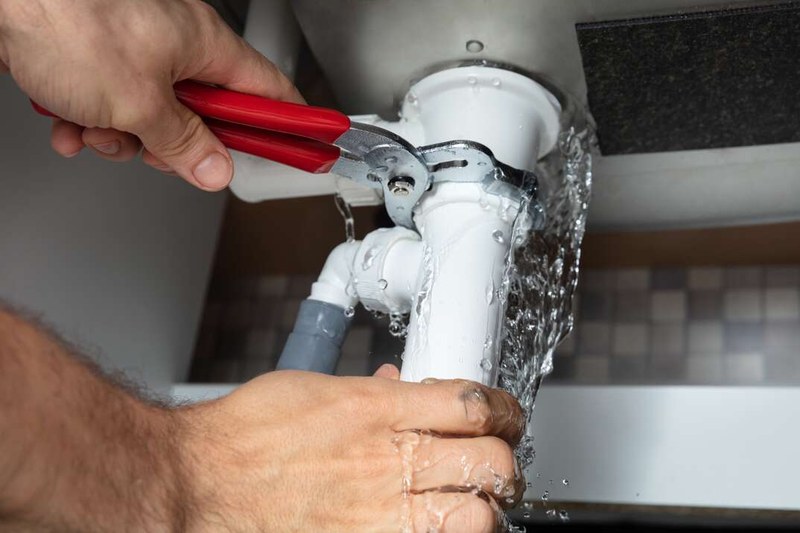
Burst pipe at 2 a.m.? Pinhole drip in the basement? Old polybutylene supply about to fail? We repair copper, PEX, CPVC, and cast iron, and full-repipe houses where the chronic leaks have outpaced the patches.
Pipe problems range from a slow pinhole drip in a basement ceiling to a full burst pipe that has dropped an inch of water on a finished floor. The right tool for each is different. We carry the equipment for all of it: SharkBite connectors, ProPress, traditional sweat for copper, expansion-tool PEX, solvent welds for CPVC and PVC, and oakum and lead for the cast-iron drain stacks still in older Hempstead homes.
When you call a plumber for burst pipes, the first job is to stop the water. Our trucks are stocked with shutoff valves, repair couplings, and the right fittings for whatever material your home is piped in, so we can make a permanent repair on the first visit instead of a band-aid that fails next week.
For drain side issues we replace P-traps, trap arms, branch drains, vent stacks, and any 4 inch PVC or cast iron drain pipe that has cracked or pulled apart. For larger projects we plan a clean repipe in copper or PEX, run during off hours where possible, with cleanouts and shutoffs added in the right places so future repairs are cheaper. Every repair gets a pressure test and a written workmanship warranty before we close up the wall.
Common Pipe Problems
Three Kinds of Pipe Calls We Run Most
Most pipe repair calls in Hempstead fall into one of these three buckets. Knowing which one helps us bring the right materials on the first visit.
Burst Pipe
A pipe that has split or blown apart, usually from a freeze, corrosion, or pressure spike. Water is on the floor, and the priority is shutting it off and making a permanent repair fast. We carry repair couplings sized for half-inch through 1.5-inch supply lines so most basement bursts are sub-hour visits once the water is off.
Pinhole Leak
A slow drip, usually inside a wall or in a basement ceiling, from old copper that has corroded through over decades. Hempstead's water chemistry hits some neighborhoods harder than others. Single pinholes are quick repairs; if the same pipe keeps leaking in different spots, the run is at end of life and a partial repipe makes more sense.
Failing Material
Galvanized steel supply, polybutylene, or old cast-iron drain stack that is rusted through at multiple joints. These are not single repairs; they are a system at end of life. We quote a planned repipe in copper or PEX during normal hours so you stop paying for emergency band-aids.
If you are not sure which one yours is, send a phone photo of the leak. We can usually scope it on the call within five minutes and tell you whether it is a one-spot fix or something bigger.
Materials & Methods
The Right Material for the Right Job
We are not loyal to one pipe material; we use whatever the situation calls for. Here are the two we work with most often.
CopperType L
The traditional choice for supply lines. Long lifespan, rigid runs, and works with sweat, ProPress, and SharkBite connectors. Right answer for matching existing copper, exposed runs in mechanical rooms, and gas line work. Our first choice when the existing system is still mostly copper.
PEXCross-Linked Polyethylene
Faster, cheaper, fewer joints. Flexible runs through joists with fewer fittings, freeze tolerance better than copper, and no soldering inside finished walls. Right answer for repipes, wall-buried runs, and any job where the labor savings outweigh the rigid-look-of-copper preference.
For drain lines we work in PVC for above-ground, ABS where it makes sense, and cast iron when matching an existing drain stack in an older Hempstead home where sound dampening matters. SharkBite plumbing fittings are useful for emergency repairs and tight spaces; we use them strategically rather than across an entire run.
If you have a strong preference (some homeowners want all-copper, some specifically want PEX), tell us on the call. We quote both options where both make sense.
What's Included
Flat-Rate Pricing, Pressure Tested Before We Close Up
Flat-rate trip and diagnostic
Every pipe repair call starts with a flat trip charge that covers the diagnosis. The fee is applied toward any repair you authorize. No hourly clock running while we figure out which joint is bad.
Written estimate before parts
After we open the access and confirm the scope, you get a written estimate covering parts, labor, and any required code-driven extras (new shutoff valves, hammer arrestors, missing supports). You approve before we cut anything else.
Pressure test & written warranty
Every pipe burst in house we touch gets a pressure test before we close the wall and a written workmanship warranty on the connection. The materials carry their own manufacturer warranties (50+ years on PEX); we register them when applicable.
Insurance documentation
If the leak caused damage you are filing on homeowners insurance, we document the failure with photos, a written cause-of-loss statement, and the location and material of the failed section. Adjusters get what they need to pay the claim.
How It Works
Four Steps from Drip to Done
Most pipe repair jobs follow the same path, whether it is a one-spot fix or a planned repipe.
1
Phone consultation
Tell us what is happening: where the leak is, the home's age, what material the pipes are. A photo helps. Active emergencies (water on the floor) get same-day dispatch; planned repairs get scheduled within a day or two.
2
Shut off and access
For active leaks we shut off the relevant valve, then open the smallest access cut needed to expose the failed section. For planned work we lay out the run and shut off the supply at the chosen scope before opening anything.
3
Repair or replace
Spot repair with a coupling and fresh section, repair multiple sections during a partial repipe, or run brand-new lines for a full repipe. Sweat, ProPress, SharkBite, or PEX expansion as the situation calls for.
4
Pressure test and patch
Before any wall closes, we pressurize the line and watch for drops. Once it holds, we patch drywall (or coordinate with a drywall finisher for larger openings), restore service, and walk you through the work.
Pipe Services
Every Common Pipe Job in a Hempstead Home
From a midnight burst-pipe call to a planned whole-house repipe, here is what we run most often.
Burst Pipe Repair
Frozen, corroded, or pressure-fatigued pipe that has split or blown apart. We shut off, cut out the failed section, install a new section with copper or PEX, pressure test, and patch back. Most basement burst-pipe calls are sub-hour visits once the water is off.
Pinhole Copper Repair
Old copper supply lines develop pinholes that drip slowly inside walls. We cut out the failed section and splice in a fresh piece in copper or PEX, depending on what is around it. If the same pipe keeps leaking we quote a planned partial repipe.
Whole-House Repipe
For homes with chronic leaks, failing polybutylene supply, or galvanized steel that has rusted from the inside out. We plan the route, sequence the work to minimize water-off time, and rerun supply in copper or PEX with new shutoffs at every fixture.
Polybutylene Replacement
The grey plastic supply lines installed in the 1980s and 1990s. Known to fail without warning. If your home was built or repiped in that window and still has poly, replacement before the next leak is much cheaper than after.
Cast-Iron Drain Repair
Older Hempstead homes still have cast-iron drain stacks. We patch corroded sections, replace failed wyes, and quote full stack replacement when the rust has gone past patching. PVC or ABS replacement runs cleaner and lasts decades longer.
P-Trap & Drain Pipe
Replace P-traps, trap arms, branch drains, and any 4 inch PVC pipe that has cracked or pulled apart. Most under-sink and bathroom drain repairs are quick visits once the cabinet is cleared out.
Gas Line Repair
Black iron and CSST gas line repair. Always call National Grid first if you smell gas; once the meter is locked out, we repair the failed joint, valve, or appliance connection and pressure test the line. Licensed for natural gas work in Nassau County.
Vent Stack Repair
The vent stack runs up through the roof and lets drains breathe. Cracked or rusted vent stacks cause slow drains, gurgling, and sewer smell. We repair or replace failed sections without tearing up the roof when possible.
Shutoff Valve Replacement
Stuck or leaking main shutoff valves, fixture-side shutoffs, and angle stops. Worth swapping before they fail; a tired shutoff that snaps when you turn it during an emergency turns a small leak into a flooded basement.
Pipe Burst Right Now?
Stop the water and call. We answer 24/7, dispatch a same-day truck, and walk you through the shutoff while we are on the way.
Common questions we get on the phone before scheduling.
A standard single-spot pipe repair in Hempstead typically runs $325 to $625 depending on access, material, and whether drywall has to be opened. Burst pipe response is in the same range when a single section is failed. Whole-house copper or PEX repipes for a typical Hempstead home run $7,500 to $15,000 depending on size and complexity. Every quote is written before any work starts.
Both are excellent supply materials. Copper is the traditional Hempstead choice and works in any application. PEX is faster to install (fewer joints inside walls), more freeze-tolerant, and a bit cheaper. We recommend matching the existing material on partial repairs and PEX on most full repipes. The choice rarely affects long-term reliability.
SharkBite plumbing fittings carry a 25-year manufacturer warranty when installed correctly. We use them strategically (emergency repairs, tight spaces, transitions between materials) rather than across an entire repipe. For permanent installations inside walls, sweat or ProPress on copper and expansion fittings on PEX are usually the better long-term choice.
Polybutylene supply is gray or sometimes blue plastic with a stamp like "PB2110" on the side, usually visible at the water heater and the main shutoff. Installed primarily in homes built or repiped between 1978 and 1995. If your home is in that window, take a photo of the supply at the heater and we can confirm on the call. Polybutylene fails without warning; replacement before that happens is much cheaper.
Standard homeowners coverage usually pays for sudden water damage caused by a burst pipe (drywall, flooring, contents), but not the pipe itself or the repair labor. Long-term seepage and slow leaks that should have been caught earlier are usually excluded. We document the failure with photos and a written cause-of-loss statement so your adjuster has what they need.
A typical Hempstead repipe takes three to five working days for the rough-in itself, plus drywall patching and paint. We sequence the work so water is back on at the end of each day; you do not lose service for the whole project. Insurance-covered emergency repipes run on a similar schedule and we coordinate with the mitigation crew if drying is involved.
Related Services
Other Services Often Tied to Pipe Calls
Pipe trouble is often part of a bigger picture. These are the next pages.
Leak Detection
If the leak is hidden behind a wall, we find it first with acoustic and thermal tools before any drywall comes down.