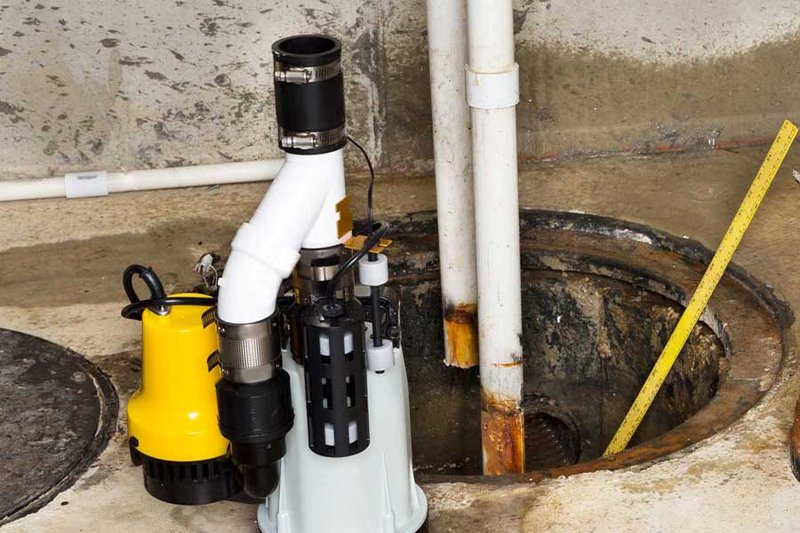
Long Island sits on a high water table. When the pit fills up and the pump does not run, the basement floods. We repair primary pumps that have failed, swap in better units, and install battery backups so a power outage during a nor'easter does not leave you bailing.
Hempstead and most of Nassau County sit on a shallow water table, which is why almost every basement on Long Island has a sump pump in the corner. When the pump works, you never think about it. When it does not, a single bad storm puts six inches of water across a finished floor. The pump itself is one part. The float switch, check valve, discharge line, GFCI outlet, and the pit it sits in all matter just as much.
Most calls fall into one of three patterns: an old pump has burned out and the basement is already wet, the float is stuck and the pump is either running constantly or not running at all, or a homeowner has just bought the house, looked at the rusted pump in the corner, and wants to replace it before they find out the hard way. We carry pumps, floats, check valves, and discharge fittings on the truck so most calls are single-visit.
For homes that have flooded once already, the right answer is usually a combo system: a primary submersible pump on the main pit and a battery-backup pump piggy-backed beside it, with its own float higher up. When the power goes out during a coastal storm (which is when basements flood), the backup runs on the battery for 6 to 12 hours of pumping. We size the battery to your basement.
Common Pump Problems
Three Kinds of Sump Pump Calls We Run Most
Most sump pump calls in Hempstead show up in one of these three forms. Knowing which one you have helps us bring the right pump on the first truck.
Pump Failed, Basement Wet
The pump motor has burned out, the impeller has seized, or the float is stuck and the pit overflowed. Water on the floor right now. Highest priority: pull the failed pump, drop in a new one, get the level back down. Most replacements are sub-hour visits once we are on site.
Cycling Constantly
The pump runs every minute or two even when it is not raining. Usually a stuck float, a check valve that has failed and is letting water back into the pit, a cracked pit liner, or a discharge line that is blocked or pitched wrong. Catching this early avoids a burned-out pump motor.
Old & Rusted, Pre-Storm
The pump in the corner is 12 years old, has rust streaks on the housing, and a noisy bearing. It works for now, but you can hear it is on the way out. Replacement before a storm is a planned visit; replacement during a storm is an emergency. Doing it on your terms is much cheaper.
If you are not sure which one yours is, send a phone photo of the pit. We can usually scope it on the call within five minutes and tell you whether you need a same-day truck or a scheduled visit.
Pump Types
Submersible vs. Pedestal: Which One You Need
Two main pump styles work in a residential pit. The right one depends on the pit size, how often it runs, and how much noise you can tolerate.
SubmersiblePit-mounted, 1/3 to 1 HP
The standard for most Hempstead basements. Sits underwater inside the pit. Quiet, longer-lasting, handles solids better, and works in any pit deep enough to fit it. Cast-iron housings hold up best in our water chemistry. First choice for finished basements where you do not want to hear the motor.
PedestalAbove-pit motor
Older homes and shallow pits. Motor sits on a column above the pit, only the impeller is in the water. Easier to service, runs cooler, but louder, and not ideal for fine sediment. Right answer when the pit is too shallow for a submersible or the basement is unfinished and noise does not matter.
For homes that have flooded once, we usually recommend a combo system: a primary submersible plus a battery-backup pump alongside. The backup has its own float set a couple inches higher, so it only runs if the primary fails or the power is out. The two units share a single discharge line through a Y-fitting with check valves on each leg.
We stock pumps from manufacturers we trust (Zoeller, Liberty, Wayne, and a few others). The big-box-store brand-name pumps usually fail in three to five years; the contractor-grade pumps we install run 10 to 15 with normal maintenance.
What's Included
Flat-Rate Pricing, Tested in the Pit Before We Leave
Flat-rate trip and diagnostic
Every sump pump call starts with a flat trip charge that covers the diagnostic. The fee applies toward any repair or replacement you authorize. No hourly clock running while we figure out whether the float is bad or the motor is bad.
Written estimate before parts
After we look at the pit, you get a written estimate covering the new pump, check valve, discharge fittings, and any pit clean-out or liner work needed. Nothing happens until you approve the number.
Tested with water before we leave
After a new pump is in we fill the pit with a hose and watch a full pump cycle: float lifts, pump kicks on, water level drops, float falls, pump shuts off, check valve holds. We do this twice. If anything is off, it gets fixed before we walk out.
Manufacturer + workmanship warranty
Every pump we install carries the manufacturer warranty (usually 3 to 7 years on contractor-grade units) plus a written workmanship warranty on the install. We register the pump for you when applicable so the clock starts on day one.
How It Works
Four Steps from Failed Pump to Dry Basement
Most sump pump replacements follow the same path, whether it is an emergency swap during a storm or a planned upgrade with a battery backup.
1
Phone consultation
Tell us what is happening: how old the current pump is, whether the basement is wet right now, and whether you have backup power. Active flooding gets same-day dispatch; planned upgrades schedule within a couple of days.
2
Pull and inspect
We unplug the old pump, lift it out of the pit, and look at what is in there: sediment level, liner condition, check valve, discharge pipe pitch, and the GFCI outlet. About one in three pits also need a clean-out.
3
Install & connect
New pump in, new check valve, new discharge fittings as needed. Battery backup unit added beside the primary if that is part of the scope. We re-pitch the discharge if it was draining the wrong way.
4
Wet-test & walkthrough
Fill the pit with a hose, watch a full cycle (twice), confirm the check valve holds, then walk you through what to look for and what regular maintenance looks like. Most pumps want a 5 minute check twice a year.
Sump Pump Services
Every Common Pump Job in a Hempstead Basement
From a midnight emergency replacement during a storm to a planned battery-backup install in dry weather, here is what we run most often.
Submersible Pump Replacement
Cast-iron submersible primary pump, sized to your pit and the home's water table. Most Hempstead basements need a 1/3 or 1/2 HP unit. Includes new check valve, new discharge fittings, and a wet-test before we leave.
Pedestal Pump Replacement
Older basement with a shallow pit that does not fit a submersible? A new pedestal-style pump with a tested float. Louder than a submersible but easier to service and a fraction of the cost.
Battery Backup Install
Add a 12-volt battery backup pump beside the primary, with its own float higher up and a deep-cycle marine battery in a ventilated case. Six to twelve hours of pumping during a power outage. The single best investment for a finished basement.
Combo Primary + Backup System
Brand-new dual system: primary submersible plus battery backup, sharing one discharge through a Y with check valves on each leg. Wired alarm that sounds if either pump runs unexpectedly. The right call after a flood.
Float Switch Replacement
Stuck or failed float is the most common single-cause pump failure. Tethered, vertical, or piggy-back float swap on the existing pump. Quick visit when the pump motor itself is fine.
Check Valve Replacement
The check valve sits on the discharge line above the pump and stops the column of water from running back into the pit when the pump shuts off. A failed check valve makes the pump cycle constantly. Easy fix, big difference.
Pit Clean-Out
Pull the pump, vacuum out the silt, gravel, and debris that has built up in the pit liner over the years. A clogged pit makes any pump cycle harder. Often combined with a pump replacement.
Discharge Line Re-Pipe
The pipe that carries pumped water from the pit out of the house. PVC re-pipe with proper pitch, a freeze-resistant exterior fitting, and an air-gap that keeps frozen exterior ice from blocking the line. Eliminates winter discharge failures.
Water Alarm & WiFi Sensor
Add a WiFi-enabled pit-water sensor that texts you the moment the level rises higher than it should. Pairs with most modern pump systems. The early warning that has saved more than one Hempstead basement.
Pump Quit Mid-Storm?
Unplug the pump and call. We answer 24/7, dispatch a same-day truck with replacement pumps on board, and walk you through what to do while we are on the way.
Common questions we get on the phone before scheduling.
A contractor-grade cast-iron submersible pump in a Hempstead basement typically runs 10 to 15 years if the pit is reasonably clean and the pump is not running constantly. Big-box-store plastic-housing pumps usually fail in 3 to 5 years, especially in pits with sediment or high cycling. If yours is past 8 years and visibly rusted, replacing it before a storm is much cheaper than during one.
A standard primary submersible replacement in Hempstead typically runs $675 to $1,150 installed, including the pump, new check valve, new discharge fittings, and the wet-test. Adding a battery backup pump alongside runs another $850 to $1,400 depending on battery capacity. A full new pit (when the existing liner has cracked) runs $2,500 to $4,500. Every quote is written before any work starts.
If your basement is finished, has anything stored in it that you would not want soaked, or has flooded once before: yes. Power outages on Long Island happen most often during the same coastal storms that fill the pit fastest, which is exactly the worst combination. A battery backup gives you 6 to 12 hours of continued pumping when the lights go out, which is usually enough to ride out the storm. If the basement is unfinished and has nothing in it, the math is different.
Constant cycling almost always means one of three things: a failed check valve letting water flow back into the pit after each cycle, a stuck float that thinks the level is higher than it really is, or a pit that is genuinely getting hammered (often from a clogged perimeter drain or a yard grade that funnels water toward the foundation). Any of these wear out the pump motor fast. Worth looking at as soon as you notice it.
For most Hempstead basements a 1/3 HP submersible is plenty. Homes with high water tables, deeper basements, or houses that have flooded before usually want a 1/2 HP. A 3/4 HP makes sense for very wet sites or houses with finished basements that need to clear the pit fast during a storm. We size to your actual pit and water table, not by square footage.
Twice a year, typically in early spring before snowmelt and in early fall before hurricane season. Pour a five-gallon bucket of water into the pit, watch the float rise, the pump kick on, the level drop, and the pump shut off cleanly. Five minutes. The single most-skipped piece of home maintenance and the one most likely to save a finished basement.
Related Services
Other Services Often Tied to Pump Calls
A flooded basement is rarely about just the pump. These are the next pages.
Emergency Plumbing
24/7 response for active flooding, burst pipes, and anything where water is on the basement floor right now.
If the basement backs up through the floor drain instead of the pit, that is a sewer issue, not a pump issue. Camera inspection and trenchless repair available.
Wet basement that the pump cannot keep up with? Sometimes the source is a leaking supply line or hot-water line, not groundwater. We find it before assumptions get made.
Floor drains and laundry standpipes that back up during heavy rain are usually a clogged main, not a pump issue. Auger and jet service for any line in the house.