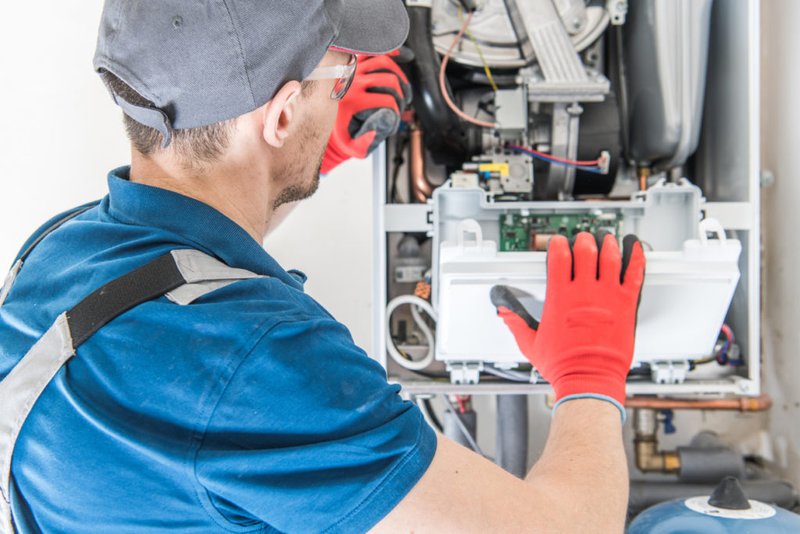
No heat in the house on a 20-degree morning? Boiler running but the rads are still cold? Pressure gauge sitting at zero? We diagnose gas boilers (cast-iron, modulating-condensing, combi) on site and repair what we can on the same visit, so the heat is back before bedtime.
Hempstead homes mostly heat with hydronic gas boilers feeding cast-iron radiators or baseboard. When one quits during a January cold snap, you do not have time for a long diagnostic. Our trucks are stocked with the parts that account for most no-heat calls: thermocouples, hot surface ignitors, gas valves, circulator pumps, zone valves, expansion tanks, and feed-water valves. Most repairs happen on the first visit.
Whether you call a plumber for boiler repair or an HVAC tech depends on the boiler. Cast-iron sectional boilers and the hydronic side of modulating-condensing units are plumber territory; we are licensed for the gas line, the supply and return piping, the circulators, the zone valves, and the boiler internals. We handle the whole hydronic system as one job rather than handing pieces back and forth.
For older atmospheric boilers (Weil-McLain, Burnham, Crown, Peerless) we work on the standing-pilot and intermittent-pilot ignition trains, replace failed gas valves, and clean burner assemblies. For modern modulating-condensing units (Lochinvar, Navien, Rinnai, Triangle Tube, Viessmann) we read the fault code, pull the diagnostic history, clean the heat exchanger when needed, and replace the failed component. Same boiler vocabulary either way.
Common Boiler Problems
Three Kinds of No-Heat Calls We Run Most
Most boiler repair calls in Hempstead show up in one of these three forms. Knowing which one you have helps us bring the right parts on the first truck.
No Heat, House Cold
Boiler is dead on the wall, no fire, no pump running. Could be ignition (thermocouple, ignitor, gas valve), low water pressure, a tripped low-water-cutoff, or a blown fuse on the control board. Highest priority during winter; we dispatch same day.
Boiler Runs, Rads Cold
The burner fires but the radiators (or baseboards) on one or more zones never get warm. Almost always a stuck zone valve, a failed circulator pump, or air trapped in the loop. Easy to bring the heat back once the actual cause is found.
Short Cycling or Error Code
Boiler kicks on for a minute, shuts down, retries, locks out. Usually a flame sensor that needs cleaning, a failing pressure switch, low system pressure, or (on mod-cons) a fouled heat exchanger. Catching this early saves the boiler.
If you are not sure which one yours is, send a phone photo of the boiler and any error code on the display. We can usually scope it on the call within five minutes and tell you which parts to bring.
Boiler Types We Service
Cast-Iron, Mod-Con, and Combi: We Work on All Three
Hempstead basements have all three styles, often in the same neighborhood. The diagnosis tools and the parts that fail are different for each.
Cast-Iron SectionalAtmospheric or power-vent
The classic Hempstead boiler. Weil-McLain, Burnham, Crown, Peerless. Standing-pilot or intermittent-pilot ignition, simple gas valve, and a circulator on the supply or return. Built to last 30+ years. Most repair calls are ignition train, gas valve, or circulator. Parts are still readily available.
Mod-Con & CombiWall-hung condensing
The modern install. Lochinvar, Navien, Rinnai, Triangle Tube, Viessmann. Stainless or aluminum heat exchanger, sealed combustion, fault-code display. Higher efficiency but more sensitive to water quality and combustion air. Fault codes point us at the failed sensor or the dirty heat exchanger directly.
For older atmospheric units we focus on combustion (clean burners, set the gas pressure correctly, confirm draft) and the safety chain (low-water cutoff, pressure relief, high-limit aquastat). For modulating-condensing boilers we add condensate-trap clean-out, neutralizer service, and combustion analysis to the visit.
Combi units that also produce hot water on demand have an additional plate heat exchanger and DHW priority logic. We are happy to walk through whether your no-hot-water issue is in the boiler side or the domestic side.
What's Included
Flat-Rate Pricing, Combustion Tested After Every Repair
Flat-rate trip and diagnostic
Every boiler repair call starts with a flat trip charge that covers the diagnostic. The fee applies toward any repair you authorize. No hourly clock running while we read fault codes and trace the safety chain.
Written estimate before parts
Once we have the diagnosis, you get a written estimate covering parts, labor, and any required code-driven extras (new low-water cutoff, expansion tank, isolation valves). You approve before we order or install anything.
Combustion test & written warranty
After any repair on the gas side or the burner, we run a combustion analyzer and confirm CO levels and combustion efficiency are in spec. Repairs carry a written workmanship warranty on the connection; parts carry the manufacturer warranty.
Walkthrough before we leave
Before we pack up we walk you through what failed, what to watch for, and a few things you can do yourself between service visits (check pressure, bleed a rad, look at the sight glass). The boiler runs through a full cycle while we are still on site.
How It Works
Four Steps from No Heat to Steady Heat
Most boiler repair calls follow the same path, whether it is an emergency no-heat dispatch on a freezing morning or an annual tune-up in early fall.
1
Phone consultation
Tell us what is happening: what the thermostat is doing, whether the boiler fires at all, any error code on the display, and the boiler brand and approximate age. No-heat calls in cold weather get same-day dispatch; planned tune-ups schedule within a few days.
2
Diagnostic on site
We read fault codes, check the gas pressure, the system pressure, the safety chain, and the ignition train. Most no-heat calls are diagnosed within 20 minutes. We tell you what failed and what the fix costs before any parts come out.
3
Repair on the spot
Replace the failed thermocouple, ignitor, gas valve, circulator, zone valve, or expansion tank. Common parts are on the truck. For uncommon parts on a still-working boiler we order overnight and return the next day with no second trip charge.
4
Combustion test & cycle
After any gas-side or burner work, combustion analyzer confirms CO is in spec. We run the boiler through a full cycle, watch the rads come up to temp, and make sure the system pressure holds. Walkthrough on what we did before we leave.
Boiler Repair Services
Every Common Boiler Repair Job in a Hempstead Home
From a 6 a.m. no-heat call to a planned annual tune-up before the cold sets in, here is what we run most often.
No-Heat Diagnostic
Boiler is dead, house is cold, and you need an answer fast. We trace the safety chain, read fault codes, check gas and water pressure, and identify the failed component within 20 minutes most of the time.
Ignition Repair
Standing pilot won't stay lit, hot surface ignitor cracked, or intermittent ignition module failed. We replace thermocouples, thermopiles, ignitors, and the gas valves they trigger. Common parts are on the truck.
Circulator Pump Replacement
Failed circulator (Taco, Grundfos, Bell & Gossett) means one or more zones never warm up even though the boiler is firing. We swap with the same-spec replacement, purge air from the loop, and confirm flow.
Zone Valve Service
Stuck or failed zone valve (Honeywell, Taco, White-Rodgers) traps a single zone in the cold. Power-head swap or full valve replacement depending on what failed. Thermostat-side wiring checked at the same visit.
Expansion Tank & Pressure
System pressure dropping (or spiking past 30 psi) usually means a failed expansion tank or a leaking auto-feed valve. We test the bladder, replace the tank, and reset pressure to spec, usually 12 to 15 psi cold.
Annual Boiler Tune-Up
Pre-winter service. Burner clean, combustion analyzer test, gas pressure check, safety chain test, expansion tank pressure check, and condensate trap clean (on mod-cons). Catches problems before the cold sets in.
Mod-Con Heat Exchanger
Modulating-condensing boilers can foul the heat exchanger over time, especially in homes with poor water quality. Acid flush, descale, and combustion re-tune so the unit runs at rated efficiency again.
Low-Water Cutoff Service
Required safety device on most modern boilers. When the float gets stuck or the probe fouls, the boiler locks out for "low water" even when there is plenty. Test, clean, or replace as needed; reset to active.
Combi Hot-Water Side
Combi boiler running heat fine but no hot water (or warm-then-cold)? The plate heat exchanger or the DHW flow sensor is usually the cause. We diagnose the domestic side without replacing the whole unit.
No Heat Right Now?
If you smell gas, leave and call National Grid first. If not, call us. We answer 24/7, dispatch a same-day truck during winter, and can usually have heat back the same visit.
Common questions we get on the phone before scheduling.
A standard boiler repair in Hempstead typically runs $325 to $850 depending on the failed component. Common ranges: thermocouple or hot surface ignitor $250 to $400, gas valve $475 to $750, circulator pump $475 to $850, zone valve $375 to $625, expansion tank $375 to $575. A combustion analyzer test runs another $125 when not bundled. Every quote is written before any work starts.
Same-day during business hours and 24/7 phone answer. Typical response time on a no-heat call in winter is 2 to 4 hours from the call to a truck in the driveway, depending on where you are in Nassau County and how busy the day is. Cold snaps stack up calls fast, so the earlier you call after losing heat, the better the slot.
For hydronic boilers (cast-iron sectional, mod-con, combi) heating water that goes through pipes to radiators or baseboards, a master plumber is the right call. We are licensed for the gas line, the supply and return piping, the circulators, and the boiler internals. HVAC techs typically focus on forced-air furnaces and AC. For a hydronic system, having one license cover the whole job is faster and avoids the back-and-forth.
A cast-iron sectional boiler with annual service typically runs 25 to 40 years. Modulating-condensing wall-hung units typically run 15 to 25, depending heavily on water quality and combustion air quality. The repair-vs-replace decision usually tips toward replace when the cost of the repair is more than half the cost of a new unit and the boiler is past its expected life. We can give you both quotes side by side.
A residential hydronic system should sit between 12 and 18 psi when the boiler is cold, and rise to maybe 22 to 28 psi when fully hot. If you see zero, the system has lost water (often through a relief valve discharge) and the boiler will refuse to fire. If you see 30+ and the relief valve is dripping, the expansion tank is failed. Either case is worth a service call before the boiler locks out completely.
Yes. An annual pre-winter tune-up catches a tired ignitor, a fouled flame sensor, a low-pressure expansion tank, or combustion that has drifted out of spec, all before they leave you cold on a 15-degree morning. The tune-up itself is cheap; the no-heat emergency call it prevents is not. Most manufacturer warranties also require documented annual service to stay valid, especially on mod-cons.
Related Services
Other Services Often Tied to Boiler Calls
A boiler problem is often part of a bigger picture. These are the next pages.
Gas Boiler Installation
If the diagnosis comes back as "this boiler is past saving," we install replacement units (cast-iron, mod-con, combi) with the same crew, same warranty.