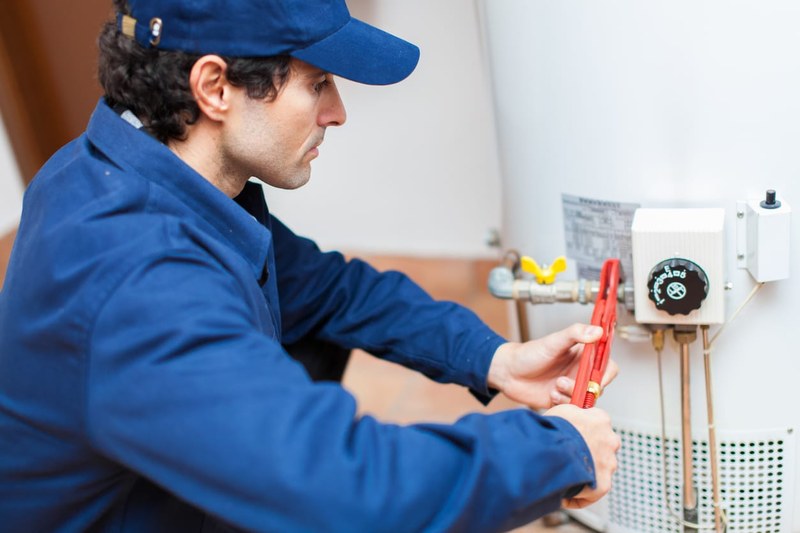
No hot water? Lukewarm shower? Tank leaking onto the basement floor? We diagnose and repair tank and tankless water heaters from a Clinton St shop, with flat-rate pricing and same-day appointments.
Most Cold-Shower Calls Are Repairs, Not Replacements
Tank, tankless & hybridAll major brandsSame-day diagnosisHonest repair-or-replace advice
When a Hempstead homeowner calls us about no hot water, the answer is almost never "you need a new tank." Most water heater repair near me calls turn out to be a thermocouple, a flame sensor, a tripped element, a popped breaker, a bad gas valve, or a stuck mixing valve. Those are repairs we finish on the first visit, often with a working shower again before we leave.
We service every common water heater in Hempstead homes: gas water heater repair, electric water heater repair, Rheem water heater repair, A.O. Smith, Bradford White, Navien tankless water heaters, Rinnai tankless water heaters, and condensing units. Every truck carries the parts that fail most often on Long Island water heaters, plus the tools to flush sediment, replace anode rods, and bleed an airlock from a tankless system.
Pricing is flat-rate and quoted before any tools come out, and we tell you honestly on the phone whether your situation is a same-day repair, a planned replacement, or a quick troubleshoot you can try yourself. If you are throwing money at a 13 year old leaking water heater, we will say so on the call before we charge a trip fee.
When to Call Us
Three Signs the Water Heater Needs Help
Most water heater calls fall into one of three patterns. Knowing which one you are dealing with helps us bring the right parts on the first visit.
No Hot Water at All
No hot water at all almost always means a control problem, not a tank problem. On a gas unit it is usually a failed thermocouple, a tripped flame sensor, or a closed gas valve. On an electric unit it is usually a tripped breaker, a popped reset button on the upper element, or a single failed element. All of these are same-day repairs once we know which one it is.
Lukewarm or Running Out
Lukewarm hot water or running out fast usually means one of two things: a failed dip tube mixing cold water into the hot side, or a heating element that is half-dead and only delivering partial output. On an old tank it can also mean six inches of sediment has reduced the effective volume. We diagnose with a quick temperature test and recovery check.
Leaking Tank
A puddle around the base of the tank is end of life. Once a tank is rusted through it cannot be repaired; the water has to be shut off and the unit replaced before it dumps. A leak from a valve, fitting, or pipe is different and almost always repairable. We can tell you which one you have on a phone photo before the truck rolls.
If your hot water just smells like rotten eggs, the fix is usually replacing the anode rod, not the unit. If you hear popping or rumbling, that is sediment hitting the burner and a flush will quiet it down. Neither is an emergency. Both are easy on a scheduled visit.
What We Service
Tank or Tankless, We Have Worked on Yours
The diagnosis path is different for tank versus tankless units, but the philosophy is the same: fix what is broken, do not sell you a replacement you do not need.
Tank40 / 50 / 75 Gallon
Gas, electric, and hybrid heat-pump units. Common repairs: thermocouple and gas-valve replacement, heating-element and thermostat replacement on electric tanks, dip-tube and anode-rod service, water heater pilot light troubleshooting, full sediment flush, and replacement of leaking T&P valves.
TanklessNavien · Rinnai
Wall-hung condensing and non-condensing units. Error-code diagnosis, descaling and flushing for hard-water buildup, heat-exchanger and igniter service, condensate-line cleaning, gas-pressure verification, and venting checks. Annual maintenance keeps the warranty alive.
We also install and service the water heater expansion tank that Nassau County code now requires on most newer installs. That little tank protects the system from thermocouple and dip-tube failure caused by closed-loop water pressure, and it is a five-minute add when we are already on site.
If a repair will buy you a year or two of life, we will quote it that way. If the unit is at the end and the repair cost is approaching half of replacement, we say so on the spot rather than burning your money on a part that will fail again next month.
What It Costs
Flat-Rate Pricing, Approved Before We Start
Flat-rate diagnostic first
Every water heater repair call starts with a flat trip charge that is applied toward the work. We do not bill an hourly clock that runs while a junior tech tries to figure out which part is bad.
Written estimate before parts
After we diagnose, you get a written estimate covering parts, labor, and any code-required add-ons (expansion tank, drain pan, T&P discharge). You approve before we replace anything.
Honest repair-or-replace advice
If your unit is at the end of its useful life, we will tell you on the spot rather than charging for a repair that will fail again next month. If it has plenty of life left, we will fix it and stand behind the work.
Same-day appointments
If the cold shower started this morning, call us first. We hold same-day water heater repair near me slots every weekday across Hempstead, Garden City, West Hempstead, and the surrounding towns.
Try First
Four Things to Check Before You Call
Some water heater problems clear without a service call. Here is what to look at first.
1
Check the breaker (electric)
For an electric water heater, look at the breaker panel. A tripped breaker for the water heater (usually a double-pole 30 amp) means the unit lost power. Reset it once. If it trips again immediately, do not keep resetting; that is an electrical fault we need to find.
2
Check the pilot light (gas)
For an older gas tank, a pilot light that has gone out is the most common no-hot-water cause. Most modern tanks have an igniter button and a small viewing window. Follow the relight sequence on the unit's label. If it will not stay lit, the thermocouple is bad and we need to replace it.
3
Note the age and brand
Every water heater has a serial number on the data plate. The first four digits usually tell us the build year. Knowing the age, brand, capacity, and fuel type before the call shapes the diagnosis and lets us bring the right parts on the first visit.
4
Listen for sounds
Popping, rumbling, or banging from the tank is sediment hitting the burner. Hissing near the gas line is a problem; leave the house and call National Grid first. A high-pitched whine on a tankless unit usually means the heat exchanger needs descaling. All three guide what we bring to the visit.
Repairs We Run
The Water Heater Calls We Run Most Often
From a no-heat thermocouple swap to a full tankless descaling, these are the repairs we keep parts on the truck for.
Thermocouple Replacement
The single most common gas water heater fix. A failed thermocouple keeps the pilot from staying lit, leaving you with no hot water. We carry universal and OEM thermocouples for Rheem, A.O. Smith, Bradford White, and other brands.
Gas Valve Replacement
When the thermocouple is fine but the unit will not fire, the gas control valve has usually failed. We diagnose with a quick voltage and pressure check, then swap the valve and re-verify operation.
Heating Element Replacement
Electric tanks have two elements; one or both can fail. We test continuity, drain the tank as needed, swap the failed element, and verify recovery time. Most calls finish in under two hours.
Anode Rod Service
The sacrificial rod that protects the tank from rust. Replacing it every 5 to 7 years can double the life of a tank. Smelly hot water (rotten eggs) is usually solved with a powered anode swap.
Dip Tube Replacement
A broken dip tube mixes incoming cold water with the hot side, leaving you with lukewarm output even though the tank is full. The fix is straightforward and almost always cheaper than replacing the unit.
T&P Valve Replacement
A leaking temperature and pressure relief valve is a code-required safety part, not a tank failure. We swap the valve, verify drain-line geometry, and confirm pressure is in spec.
Pilot Light Troubleshooting
Pilot will not stay lit, will not light at all, or keeps blowing out. Usually a thermocouple, but it can also be a clogged pilot orifice or a venting issue pulling combustion air past the flame.
Tankless Descaling
Hard water leaves scale on the heat exchanger and slowly chokes flow. Annual descaling is part of keeping a Navien or Rinnai warranty alive. We carry pumps, isolation valves, and the right cleaning solution.
Expansion Tank Service
Required by Nassau County code on most newer installs. A bad expansion tank causes T&P drips, dip-tube failure, and short component life. We test bladder pressure and replace as needed.
No Hot Water Right Now?
Call. We diagnose on the phone for free, then dispatch a truck stocked with the parts most likely to fix your unit on the first visit.
Common questions we get on the phone before the truck rolls.
A standard tank water heater typically lasts 10 to 12 years. Tankless units run 18 to 20 years with annual descaling. Hempstead's water is on the harder side, so units that never get a flush or anode change often die earlier than the rated life. Replacing the anode rod every 5 to 7 years can add years to a tank.
A simple rule: if the unit is under eight years old or the repair is under one third of replacement cost, repair. If it is 10+ years old, leaking from the tank, or the repair is over half of replacement, replace. We give you the actual numbers on the call so you can decide; we do not push replacements.
Rusty hot water is usually a failing anode rod or a tank that is starting to corrode internally. Rotten-egg smell is bacteria reacting with the magnesium anode; switching to a powered or aluminum anode usually solves it. Both are diagnosable in one visit and rarely require replacing the entire unit.
The thermocouple is a small probe that sits in the pilot flame and tells the gas valve it is safe to open. They get cooked over years of pilot exposure and eventually stop generating enough voltage. When that happens, the gas valve closes and the pilot will not stay lit, so you get no hot water. It is a 30 dollar part with a 30 minute swap.
If your home has a backflow preventer or a pressure-reducing valve on the main, yes. Nassau County code requires it on most newer installs. The expansion tank absorbs the pressure spike that happens when water heats and expands; without it, the T&P relief valve drips, dip tubes break, and water heaters fail early. We install one on every replacement and many repairs.
Depends on where it leaks. A leak from the T&P valve, the inlet/outlet fittings, the drain valve, or a pipe near the unit is repairable. A leak from the body of the tank itself (a puddle around the base, water staining on the jacket) means the inner liner has rusted through and the tank needs to be replaced. We can tell which from a phone photo.
Related Services
Other Services Often Tied to Water Heater Calls
If a repair is not the right answer, or the leak turns out to be something else entirely, these are the next pages.
Water Heater Replacement
Tank, tankless, and hybrid replacements. Includes expansion tank, code-required venting and gas piping, and removal of the old unit.