High water bill but no visible leak? Damp baseboard or warm spot on the slab? We find hidden pipe leaks with acoustic listening and thermal imaging, then quote the smallest repair that actually fixes it.
Not every leak shows up as a puddle. A high water bill, a damp baseboard, a warm spot on a slab floor, or a faint hiss in a wall is often the only clue that water is escaping somewhere it should not. Our water leak detection service starts with that exact problem: finding where the water is going before any wall or floor gets opened.
We use electronic acoustic listening equipment, thermal imaging, and tracer-gas tools to locate hidden pipe leaks, slab leaks, and pinhole copper leaks without ripping out a single piece of drywall to start. Once we know exactly where the leak is, we open a small targeted area, complete the water leak repair, and patch it back. The cost of a water leak detection company finding the source is almost always smaller than the cost of guessing wrong on a wall opening.
Every Hempstead leak detection company call ends with a written report, photos, and a marked-up location of the leak. That documentation is yours, and it is what your homeowners insurance carrier will ask for if the damage is filed as a claim. We work with adjusters all the time and we know what the paperwork has to look like.
Signs You Have a Hidden Leak
When the House Tells You There's a Problem
Most hidden leaks announce themselves quietly long before they show up as visible water. Here is when to call before the floor or ceiling gives way.
High Water Bill
A water bill that jumps 30 to 100 percent for no obvious reason almost always means a leak. The cheapest at-home test: check the water meter, do not use any water for two hours, and check the meter again. If it has moved, water is going somewhere it should not. Call us before the next bill cycle.
Damp Walls or Ceiling Stains
A damp baseboard, a slow yellow ring on a ceiling, or paint that is starting to bubble means water has been getting somewhere for a while. Acoustic listening on the wall lets us pinpoint the exact pipe and exact location before any cuts. By the time water shows visibly, the leak has usually been running for weeks.
Sound of Running Water
A faint hiss in the wall, a running sound when nothing is on, or a warm spot on a slab floor are classic slab-leak signs. Slab leaks under a foundation can run for months and rot wood framing before they show up. The earlier we listen for it, the smaller the repair.
If any of those sound familiar, get in front of it. The longer a hidden leak runs, the larger the wall opening and the more drywall, insulation, and framing have to come out. Most calls in Hempstead get scheduled within a day or two; emergency calls go out the same day.
Methods We Use
The Right Tool for Where the Water Is Hiding
Different leaks need different tools. We carry both on every truck and start with whichever one is more likely to find your specific situation.
AcousticListening
For pressurized supply lines, slab leaks, and pinhole copper. A high-sensitivity microphone and ground-contact probes pick up the sound of water escaping under pressure. Works through drywall, wood subfloor, and slab. The right tool for finding where a leaking pipe under the foundation actually is.
ThermalImaging
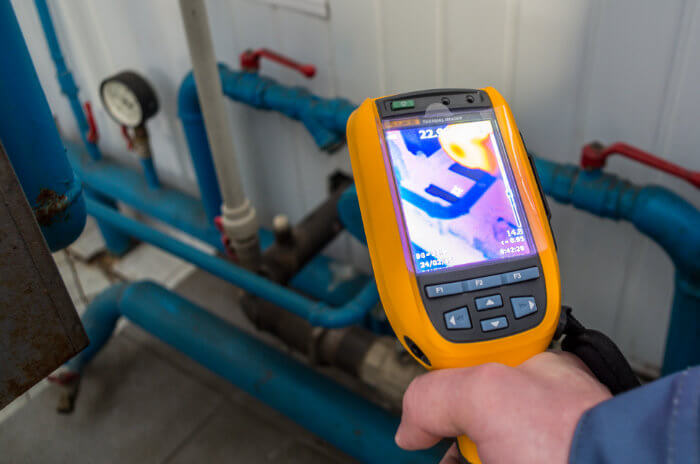
For wet drywall, water tracking through insulation, and hot-water leaks. A FLIR camera shows temperature differences invisible to the eye. Hot-water leaks light up bright; cold-water leaks show as dark cool spots once the wall has been wet for a while. Pairs perfectly with acoustic listening to confirm a find.
For tougher jobs we add tracer-gas detection: a non-toxic helium and nitrogen mix is pushed into the line, and a sniffer pinpoints exactly where it escapes. That is the right tool for very low-pressure leaks, irrigation lines, and pool plumbing.
The diagnosis is the part most people pay too much for. A water leak detection specialist with the right equipment finds the leak in an hour or two and saves you from cutting through three feet of drywall guessing.
What's Included
Flat-Rate Pricing, Insurance Documentation
Flat-rate detection fee
One flat fee for the diagnosis, regardless of how long it takes us to find the leak. The fee is applied toward any repair you authorize. No hourly clock running while we triangulate; no surprise upcharges if it takes a third tool to nail it down.
Pinpoint location, not a guess
We mark the exact location on the wall, floor, or slab before opening anything. Most opens are a single 8 by 8 inch access cut, not the four-foot section a guess would require. The smaller the opening, the smaller the patch and the lower the total project cost.
Written report for your insurance
Every leak detection ends with a report: where the leak is, what type of pipe, what caused it, and photos of the damage we observed. Your homeowners adjuster needs that paperwork to process a claim. We have done it hundreds of times and we know what the carriers want to see.
One company finds and fixes
We do the detection and the repair, so there is no second company to schedule and no finger-pointing if something does not line up. Once you authorize the fix, we make the cut, do the repair, pressure test, and patch the wall back in the same visit when the scope allows.
How It Works
Four Steps from Suspicion to Solved
Most leak detection calls follow the same path. Knowing what to expect helps homeowners make the right decisions on the spot.
1
Phone consultation
Tell us what you are seeing: a high bill, a damp wall, a sound of running water, a warm spot on the floor. We ask about the home's age, plumbing material, and where the meter sits. That shapes which tool we bring first.
2
On-site survey
We start at the meter to confirm a leak is actually present, then narrow the search. Acoustic listening, thermal imaging, and tracer gas as needed. Most leaks are pinpointed within an hour; tough cases (slab leaks under finished floor) sometimes take two.
3
Mark and document
The exact location is marked on the wall, floor, or slab. We photograph the area, take measurements, and write a short report describing the find. If you are filing an insurance claim, this is the paperwork the adjuster needs.
4
Open, repair, patch
Once you approve the repair, we open the smallest area needed, fix the pipe in copper or PEX, pressure test the line, and patch the drywall or floor back. Most single-leak jobs are finished in one visit.
Leaks We Find
Every Hidden Leak in a Hempstead Home
From a slab leak under a kitchen floor to a pinhole drip inside a wall, these are the calls we run most often.
Slab Leaks
Pressurized lines under a concrete slab usually announce themselves as a warm floor patch, low water pressure, or a high bill. Acoustic listening pinpoints the spot before any concrete gets opened. Repair options include direct access, reroute, or full repipe depending on age and material.
Pinhole Copper Leaks
Old copper supply lines develop pinholes that drip slowly, often inside walls. The acoustic signature is distinct. Once located, we repair the section, and on chronic-pinhole houses, quote a planned repipe in PEX before the next leak finds you.
Supply Line Leaks
Hot and cold supply lines running inside walls, ceilings, and floors. We trace the run with a non-invasive locator and confirm the leak with acoustic listening. Smallest possible opening, smallest possible patch.
Drain & Waste Leaks
Drain leaks are non-pressurized and harder to find with acoustic alone. We use thermal imaging on the wet area and run a smoke or dye test through the line to confirm. Most are joints in cast iron or PVC inside walls or ceilings.
Water Main Leaks
The line from the curb to the house can leak underground, often showing up as a wet spot in the front yard or a meter that ticks with everything off. We listen on the meter and the line itself, locate the leak, and quote spot repair or full replacement.
Pool & Spa Plumbing
Pools and spas lose water for many reasons; not all are plumbing. We isolate filter, return, and skimmer lines and pressure test each one. The right tool here is usually tracer gas because the lines are non-pressurized when off.
Irrigation Lines
An irrigation system that drains the water meter overnight has a leak somewhere underground. We isolate zone valves, run pressure tests, and locate the bad section without trenching the whole yard.
Gas Leaks
If you smell gas, leave the house and call National Grid first. Once the meter is locked out, we use a combustible-gas detector to find the leaking joint or appliance and replace the failed component. Licensed for natural gas and CSST work in Nassau County.
Insurance Documentation
If you are filing a homeowners insurance claim for water damage, we document the leak with photos, written report, location measurements, and a description of the failure. Adjusters get what they need to pay the claim.
Water Bill Suddenly Spiked?
Call. We diagnose on the phone, dispatch a truck with the right detection equipment, and find the leak before the next bill cycle.
Common questions we get on the phone before scheduling a detection.
For pressurized supply leaks and slab leaks, we routinely locate within a 6 to 12 inch radius using acoustic listening, often tighter with thermal imaging cross-confirmation. Drain leaks (non-pressurized) are slightly less precise but we still narrow them down to a single section of pipe so the wall opening is small.
A standard leak-detection call in Hempstead runs $325 to $550 depending on home size, accessibility, and how many tools the situation needs. The detection fee is applied toward any repair you authorize. The price for a slab leak detection company in Hempstead is on the higher end of that range because of the time and equipment involved.
Most homeowners policies cover sudden water damage from a hidden leak, including the detection cost when documented. Coverage usually does not extend to long-term seepage that should have been addressed earlier. We document the find with a written report and photos so your adjuster can make the call.
Yes. We are not just a leak detection specialist; we are a full plumbing company. Once you authorize the repair we open the access, fix the pipe in copper or PEX, pressure test, and patch the wall back. Single-leak jobs are usually finished in the same visit when the scope allows.
No. The whole point of paying for detection is so we do not have to. Most repairs need a single 8 by 8 inch access cut, sometimes smaller. The smaller opening means a smaller patch and a faster drywall and paint repair after.
It happens. Sometimes a high water bill turns out to be an irrigation timer set wrong or a bad water meter. Sometimes a damp spot is condensation, not a leak. We start at the meter to confirm a leak is real before we charge for detection, and if there is no leak we tell you that on the call before the truck rolls.
Related Services
Other Services Often Tied to Leak Calls
Once we know where the leak is, the repair often involves one of these services.
Pipe Repair
Copper, PEX, CPVC, and cast-iron repairs on supply and drain lines, plus full repipes for chronic-leak houses.